

August 29, 2026
Why Won’t This Wart Go Away? Treatment Options for Stubborn Warts in Meridian, ID
Quick Takeaways
- Some warts respond quickly to treatment, while others can persist for months or even longer.
- Different types of warts may require different treatment approaches.
- Not every rough bump or skin growth is actually a wart, making professional evaluation important.
- Dermatologists offer several treatment options when over-the-counter products haven't been successful.
- If a wart is painful, spreading, or simply isn't improving, it may be time to schedule an evaluation.
If you've been treating a wart at home and it doesn't seem to be getting any smaller, you're not alone. Many people expect over-the-counter products to work within a few weeks, only to find that the wart is still there months later.
Warts are one of the more common skin concerns dermatologists evaluate, but they aren't always straightforward. Some respond well to home treatment, while others prove much more stubborn. In some cases, what appears to be a wart may actually be a different type of skin growth that requires a professional evaluation.
At Mountain Pine Dermatology, we help patients throughout Meridian and the surrounding Treasure Valley understand what's causing their skin concerns and discuss treatment options that fit their individual needs.
Why Some Warts Don't Go Away with Home Treatment
There isn't one simple reason why a wart lingers. Several factors can influence how quickly, or slowly, it responds to treatment.
The location of the wart often plays a role. Warts that develop on thicker areas of skin, such as the bottoms of the feet, can be more difficult to treat than those found elsewhere.
Consistency also matters. Many over-the-counter products require daily application over several weeks or even months, and missing treatments can slow progress.
Every person's skin and immune responses are different as well. Two people may have similar-looking warts but experience very different results with the same treatment.
For these reasons, a wart that doesn't improve right away isn't necessarily unusual. It may simply need a different treatment approach or a professional evaluation.
Common Types of Warts a Dermatologist May Evaluate
Although people often use the word "wart" to describe any rough bump on the skin, there are several different types that dermatologists commonly see.
Common Warts
Common warts frequently develop on the hands, fingers, or around the nails. They often have a rough texture and may interfere with everyday activities depending on their location.
Plantar Warts
Plantar warts appear on the soles of the feet. Because they develop in areas that bear weight, they can become uncomfortable during walking or standing. Many patients seek professional plantar wart removal after trying home treatments without success.
Flat Warts
Flat warts are typically smaller and smoother than other wart types. They may appear individually or in groups on various parts of the body.
While these are some of the more common wart types, it's important to remember that not every skin growth is a wart. Other skin conditions can sometimes look similar, which is one reason a professional evaluation can be helpful before pursuing additional treatment.
Why Over-the-Counter Wart Treatments Don't Always Work
Many non-prescription wart removers can be effective for some people. However, they don't work equally well for every wart or every patient.
Several factors may affect the outcome, including:
- The type of wart
- Its location on the body
- How long it has been present
- The thickness of the surrounding skin
- Consistency with treatment
- Whether the growth is actually a wart
If you've carefully followed the directions for several weeks without noticeable improvement, continuing the same approach may not always be the most effective next step. A dermatologist can evaluate the area and recommend other options when appropriate.
When to See a Dermatologist for a Stubborn Wart
Many warts improve over time, but there are situations where scheduling an evaluation may make sense.
You may want to have a dermatologist examine the area if:
Rather than continuing to guess or switching from one home remedy to another, a professional evaluation can provide clarity about what you're dealing with and what treatment options may be available.
You may want to have a dermatologist examine the area if:
- The wart has remained for several months despite treatment.
- It continues to return after appearing to improve.
- It becomes painful or begins interfering with daily activities.
- Additional warts begin appearing nearby.
- You're unsure whether the growth is actually a wart.
- You've tried multiple over-the-counter products without success.
Rather than continuing to guess or switching from one home remedy to another, a professional evaluation can provide clarity about what you're dealing with and what treatment options may be available.
Professional Wart Removal and Treatment Options
If a dermatologist determines that a skin growth is a wart, treatment recommendations will depend on several factors, including the wart's location, size, and history.
Depending on your individual situation, treatment options may include:
- Prescription topical medications
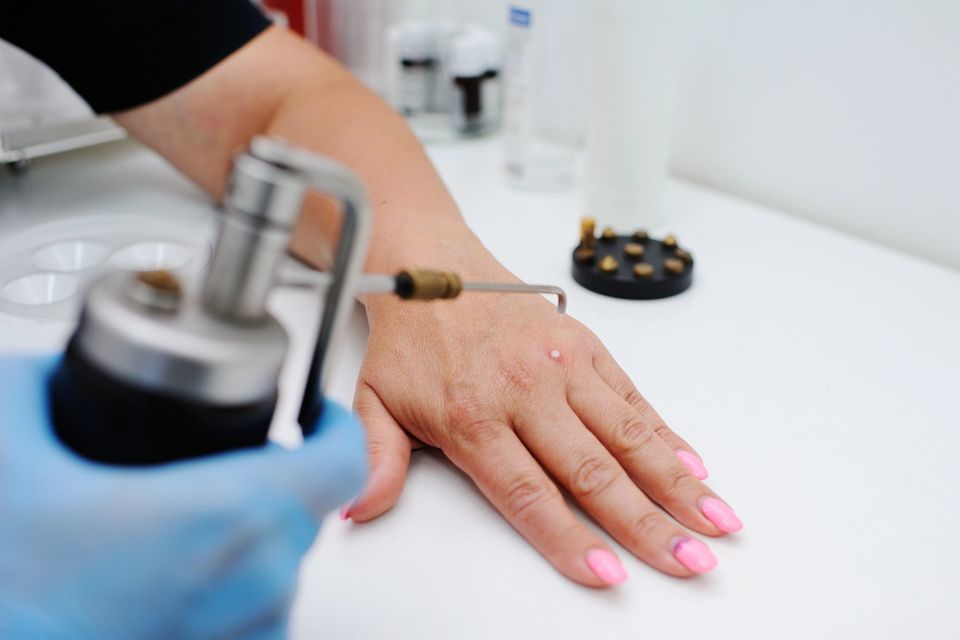
- Cryotherapy (freezing treatment)
- Cantharidin (sometimes called "beetle juice")
- Other in-office treatment options when appropriate
Your provider will explain the recommended treatment, answer your questions, and discuss what you can expect during the healing process.
Because every patient is different, there isn't a single treatment that's right for everyone. The goal is to develop an approach based on your specific situation rather than relying on a one-size-fits-all solution.
What Happens During a Wart Evaluation?
Many patients are surprised by how straightforward a dermatology appointment can be.
Your visit will typically begin with a discussion about your concerns, including how long the growth has been present and whether you've tried any previous treatments. Your provider will then examine the area and determine whether it appears consistent with a wart or another type of skin condition.
If treatment is appropriate, your dermatologist will explain the available options, discuss the benefits and considerations of each approach, and answer any questions before moving forward.
Some treatments may be performed during the same appointment, while others may require follow-up visits depending on your individualized treatment plan.
Wart Treatment for Children and Adults in Meridian, ID
Warts can affect people of nearly any age, and treatment recommendations often vary based on the patient's age, comfort level, and the location of the wart.
For children, parents often have questions about whether treatment is necessary or whether it's appropriate to continue monitoring the area. Adults may seek treatment because a wart has become painful, affects daily activities, or simply hasn't responded to home care.
During an evaluation, your dermatologist can discuss the available options and help determine an approach that fits your individual circumstances.
Looking for Wart Removal in Meridian, ID?
It can be frustrating to spend weeks or months trying different wart treatments without seeing the results you hoped for. Fortunately, you don't have to keep wondering whether you're using the right product or whether the spot is actually a wart.
If you have a persistent skin growth that hasn't improved, has become uncomfortable, or you're simply looking for answers, the team at Mountain Pine Dermatology is here to help.
We proudly provide compassionate medical dermatology services for patients in Meridian, Boise, Nampa, Eagle, and surrounding communities. If you'd like to learn more about wart removal in Meridian, ID or schedule an evaluation, contact Mountain Pine Dermatology today by calling (208) 898-7467 or scheduling your appointment online.
Call us at 208-898-7467
to schedule your consultation at an office near you. Besides our main office in Meridian, we have offices in Emmett, Caldwell, Mountain Home, and Baker City, OR.